

Ear Worms
Needing Dads, Ministry Calling, Summer Reading, and Asking Questions


Happy Father’s Day weekend folks!
I know the holiday isn’t JUST about sports, but it certainly doesn’t hurt that it falls on a GREAT sports weekend. We’re smack-dab in the middle of the World Cup (USA, USA, USA!), the US Open is popping off, and your guy is heading to Cincy to see the Savannah Bananas lay the smack down on the Party Animals. Shout out to the dads reading this week. God sees the work you’re doing to love and serve your family, and I hope it’s a great weekend celebrating you.
Last week I shared a breakdown of the Marty Machowski’s pre-conference at Gospel Kids Conference. This week, as we’re thinking about Father’s day, I wanted to share some thoughts from a break-out session that’s been running through my mind since I heard it. Sam Luce (also featured in a link below) had a session on scripture memorization from Colossians 3:16 that’s caused me to reconsider my aversion toward memory work (personally, and with my kids).
“Let the message of Christ dwell among you richly as you teach and admonish one another with all wisdom through psalms, hymns, and songs from the Spirit, singing to God with gratitude in your hearts.” - Col. 3:16
Memorizing scripture hasn’t been a huge part of my own faith. I’ve had the occasional verse on the bathroom mirror or car dash, but it’s never been part of my own discipleship journey. Part of the reason for avoiding it was my frustration with being able to do it well. Sam opened by arguing that we underestimate what our kids (at church, or at home) can understand, repeat, and memorize. If you’ve ever seen a kid play Fortnite, you know the truth of this. My son has every nook and cranny of the world map memorized, knowing exactly where each loot crate, NPC, and reboot card is. Yet, we assume memorizing pieces of scripture is a bridge too far.
As parents and teachers, we should be seeking to be proactive in what we’re helping sink into their minds and hearts. This is true whether we’re talking about particular verses, common prayers, songs, or hymns. There’s value in each of these vehicles in helping our children to build a framework of faith and understanding that will function as a lens for them to see the world through. The truth that “dwells among them richly” from the repetition of scripture, prayer, and music will hold them fast through the ups and downs of life.
Our two boys went to stay with my parents last week. My brave mom got them (and their cousin) to FCA camp in the morning, and then to VBS at church each evening. Lots of fun, sweat, learning, playing, and singing. The boys are back home now, and I’ve noticed my youngest singing hymns to himself a few times this week. I jumped in and starting singing Leaning on the Everlasting Arms with him, and he was shocked that I knew it. I’m thrilled that he’s got that little bit of theology sunk into his heart from a few days in a church that valued teaching kids old hymns.
Sam went on to share three reasons why memorizing scripture (or hymns, prayers, etc.) matters. First, he argued, knowing the Bible helps us to know God. The words of scripture are the very words of God himself. No one can tell us more about God than God himself. Our kids need their hearts protected from the world by knowing who God is, how he’s called us to live, and how he’s at work in the world. Our kids can’t follow God if they don’t know who he is.
Next, he reminded us that God’s word gives a vocabulary of faith. When we read and memorize, we’re seeing how God has spoken to his people and how his people have responded. We read the Psalms and learn how to pray. Our kids learn how to speak to God with the same language he uses to speak to us. Working through the Psalms in particular, we’re given so much language to endure the joy and pain that life brings. The more of God’s word our kids have sunk into our hearts, the deeper the resevoir of wisdom, encouragement, and truth they’ll have at hand when discouragement, suffering, or trial come.
Finally, there’s value in commiting scripture to memory because it all points to Jesus. As they’re reading, learning, and memorizing, they’re able to encounter Jesus. As they’re memorizing passages, they’re able to ask questions of the text. They can ask questions about who God is, and what he’s about. They can ask what the passage asks of themselves or others. Where are we being called to engage, and what should we do? The more of Jesus we can build into our hearts (and the hearts of our kids) the more prepared we’ll be to deal with whatever life brings our way.
While this is good work, it’s easy to turn it into another performance. A box to check to make us feel good about our standing before God. This is not Sam’s aim. He’s not pushing for us to teach our kids to memorize scripture in order to save them. “These things don’t make you a Christian. These are simply things that Christians do.” The goal isn’t simply memorization, but rather that the memorization would lead to meditation. It’s this abiding with Jesus that we’re after, and what we want to pass along to our children.

Needing Dads (Parenting, Fatherhood)
“True, biblical family ministry calls for both dads and moms to raise their kids in the fear and admonition of the Lord. So in our current cultural climate, we must ask these questions: How do we help dads engage at home? How do we help dads in their calling from Scripture? How do we change the deeply entrenched idea that raising children is only women’s work?”
After reading his stuff for years, and falling head over heels with his writing in How to Teach Kids Theology, I finally met Sam Luce at GKC last week. He’s working at Awana now (in addition to serving as a pastor), and running their blog (childdiscipleship.com). He was a week early for Father’s Day, but he’s got a great piece up on their site imploring dads to get their head back in the parenting game.
He looks back at the historical reasons we got here, and offers some solutions in the way we teach and preach to men in our pews. Sam’s not writing to diminish the role of mothers, but instead looking for ways the church can invite fathers back into their God-given role of shepherding their kids toward Jesus. Kids need wise, caring, and thoughtful moms AND dads to raise them. God empowers us for the work he calls us to, and that includes parenting our kids and shepherding them in their faith. Sam’s work here is full of encouragement for dads on the path, and for churches trying to gently nudge fathers back onto it.

Ministry Calling (Kids Ministry)
“As I look back on 13 years of full-time ministry, the moments that have shaped me most were not the times I felt strong or capable, but the times I became deeply aware of my weakness, my limitations, and my not-enoughness — and watched God’s strength prevail anyway. I am convinced that every beautiful piece of ministry I have been a part of has never been because of my ability, but because I am his child, because he is in control, and because his plans and purposes always prevail. It has never ultimately rested on me at all.”
Here’s a really great piece from Ivy Lassiter over at Rooted. It’s a quick testimony about how God brought her into kids ministry, despite her years of reservation about following in her mom’s ministry footsteps. It’s a great picture of how God often moves in ways we don’t expect, and the provision and care he offers when we’re obedient to follow his lead. If you’re new to kids ministry, or you’ve been serving for a decade, there’s a pile of grace and encouragement for you to glean here. Enjoy!

Summer Reading (Parenting)
“As a parent of voracious readers, I’ve regularly faced the challenge of helping my kids find good books. It’s often fine to read the latest popular series, even if the stories won’t stand the test of time. However, I also want my kids to read the sort of books they’ll want to share with their own kids.”
I love a list from experts. I listen to movie podcasts where they’ll interview a director and ask him who his favorite directors are. Or, if you listen to hip hop, you’ll read music writers give someone the title of “your favorite rapper’s favorite rapper.” Over at TGC, Andrew Spencer applies this thinking to building a summer reading list for kids. He reached out to a gaggle of authors and asked them about the authors and books they love recommending for kids. They each share a recommendation, and then talk about what itch that particular book might scratch. This particular list of books is geared toward 8-13 year olds, but it’s never too early to start stocking bookshelves in your house.
Asking Questions
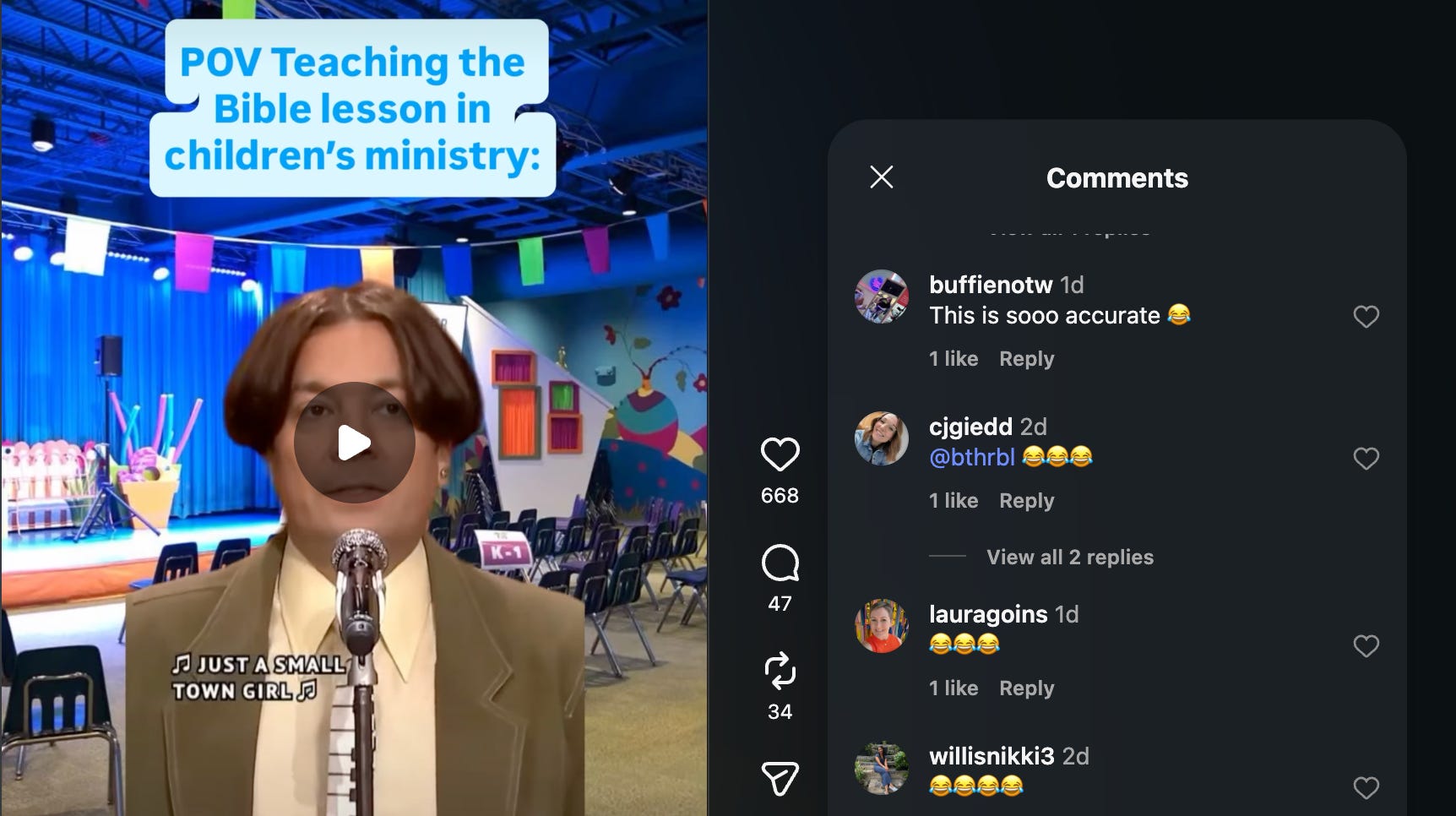
A classic skit from Fallon and Farrell, set to the music of kids ministry. What’s not to love? Would teaching kids be any fun at all without all the insane questions and interuptions? Here’s to a great Sunday of teaching, and you having all the answers for the pop-quiz coming your way.